International idea competition for Busan Opera House
STUDIO: Architectural Lab. NH Kim / 5th years
INSTRUCTOR: Namhoon Kim, Prof. / AIA. Leed Ap.
knamhoon@mju.ac.kr
CREDIT: Teamwork with 4 members
CONTRIBUTION: 3D modeling (Rhinoceros 4.0), Rendering(V-ray), Perspective views(Photoshop), Physical model(3d Printing), Panel (Indesign)
WORKING PERIOD: Jul. 2011 – Aug. 2010 (8 weeks)
LOCATION: Busan, Korea
TYPE: Opera house, Multi purpose Theater, Cultural facility
FLOOR AREA: 59,620m2
A place for the Opera house
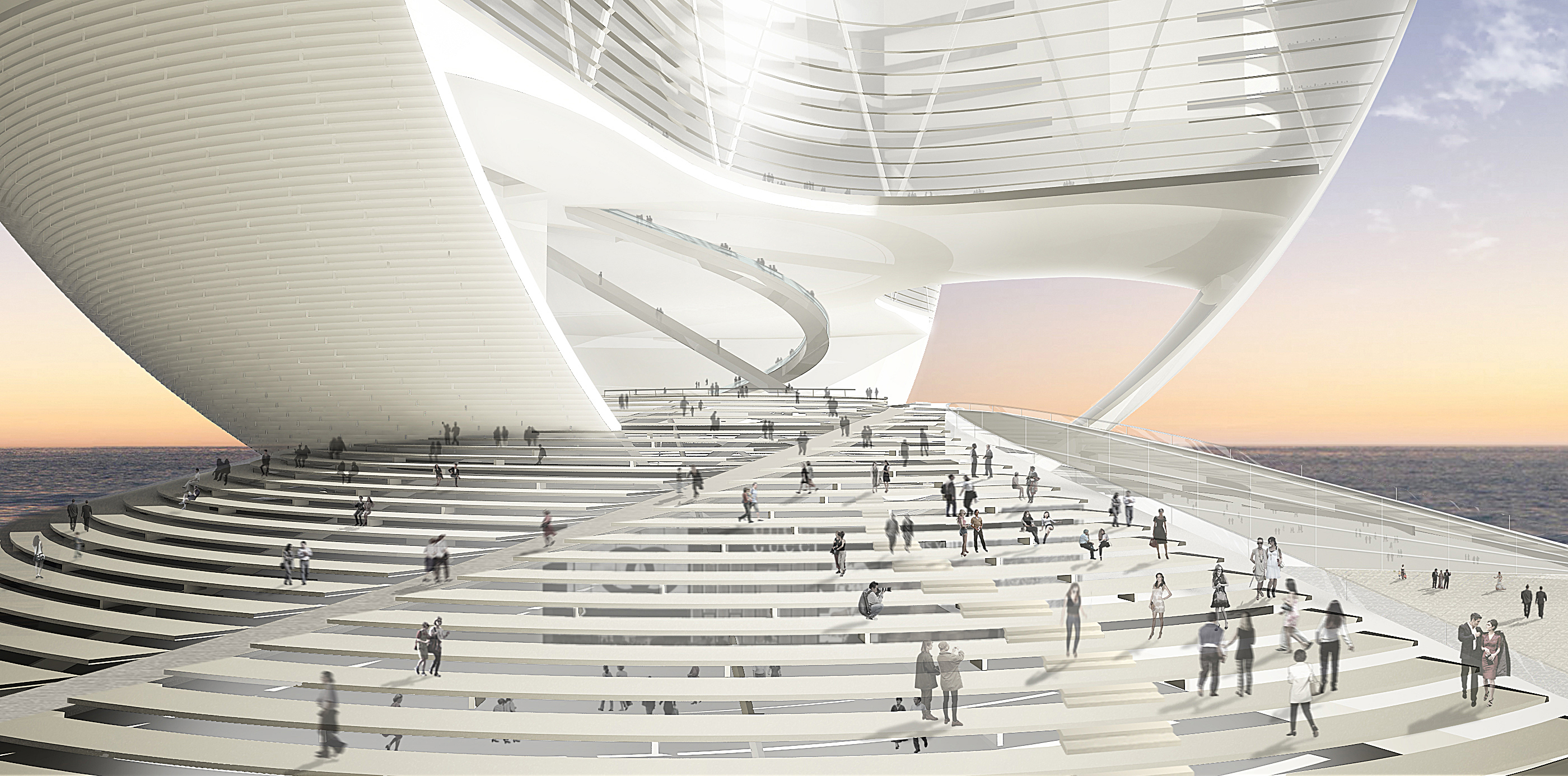
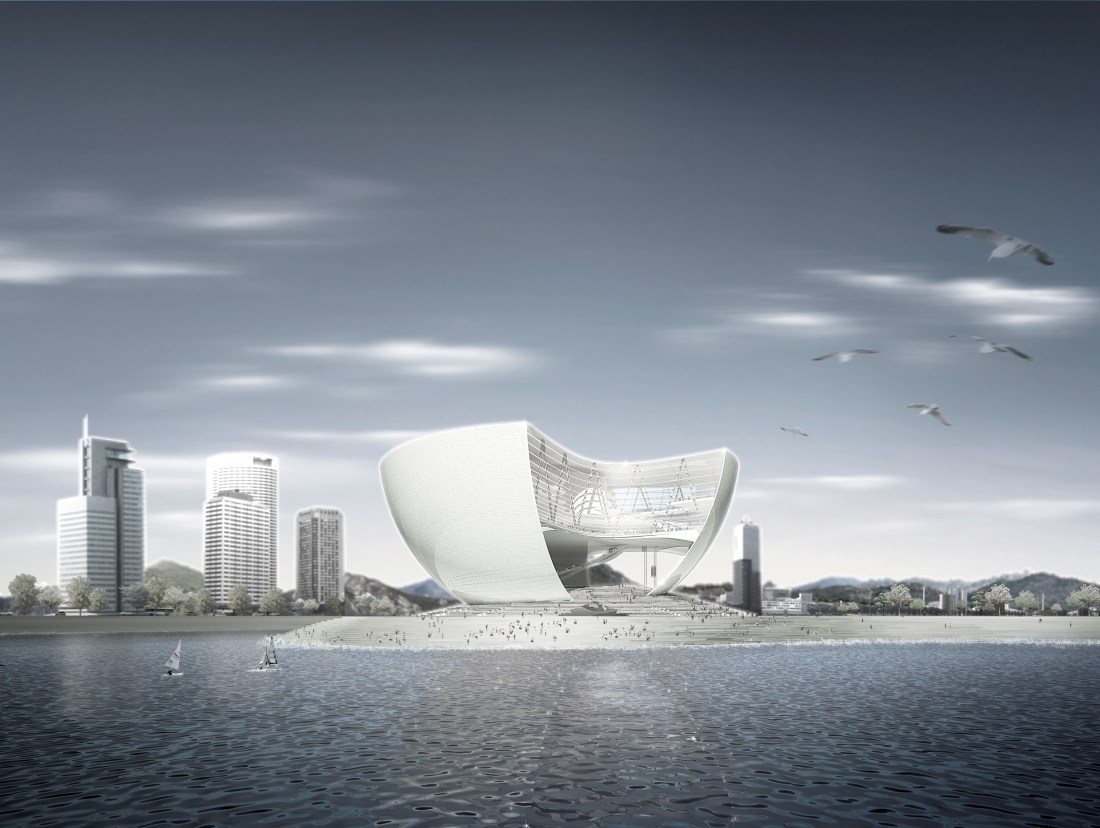
We try to make architecture which creates place rather than occupies a place. The design of the new Busan opera house has to have unchangeable architectural value for centuries in Korea. What we concerned about is how to show Korean spirits and esthetics. Therefore we started looking at the Korean history and traditional arts. What we find most interesting artwork is ‘white porcelain’ called ‘Moon-Jar’(‘Dalhangahri’ in Korean). This jar is a magnificent example of the ceramic art of the Choson dynasty (1392-1910). The greatest merit of white porcelain lies in its absolute purity.
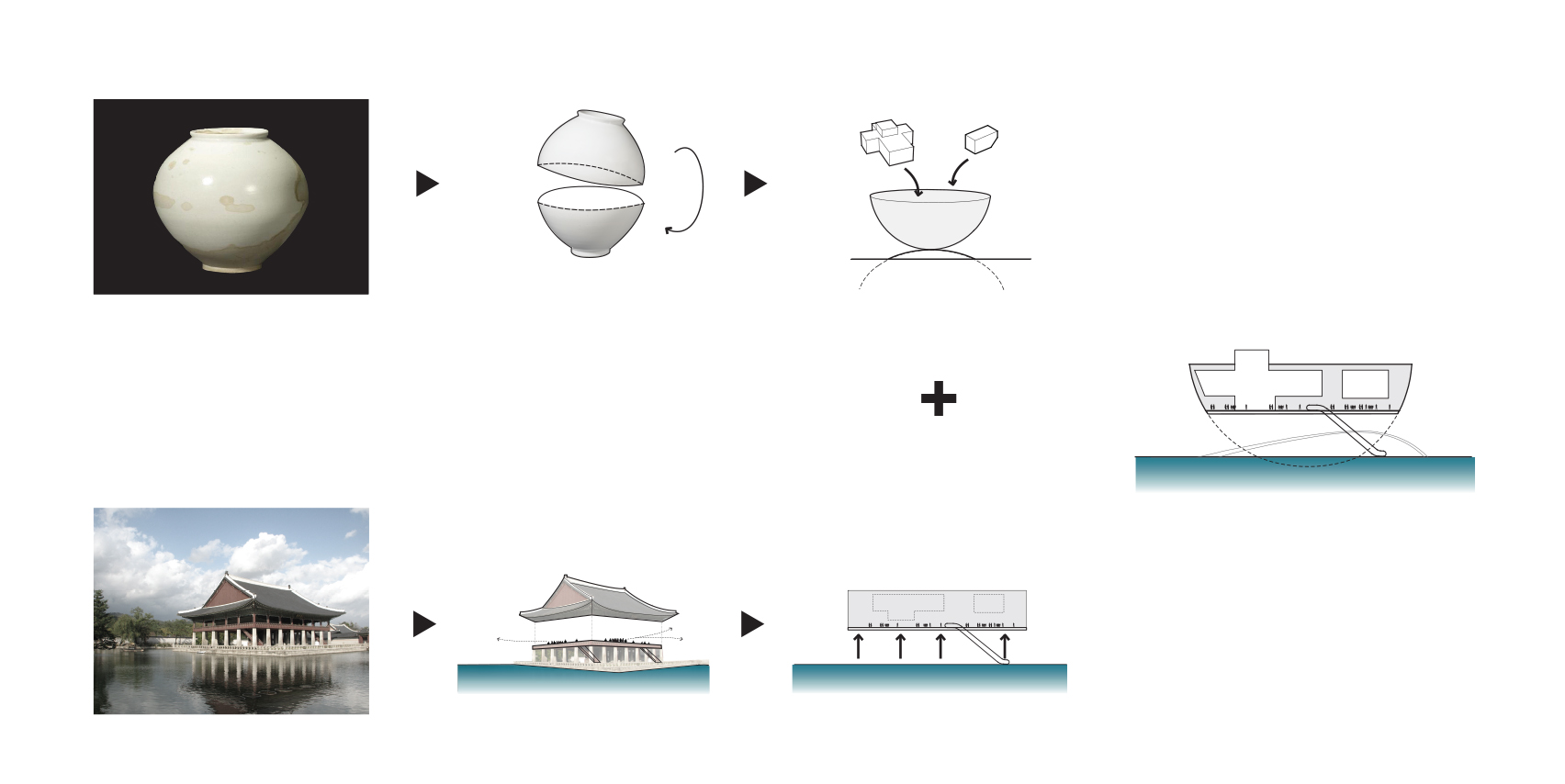
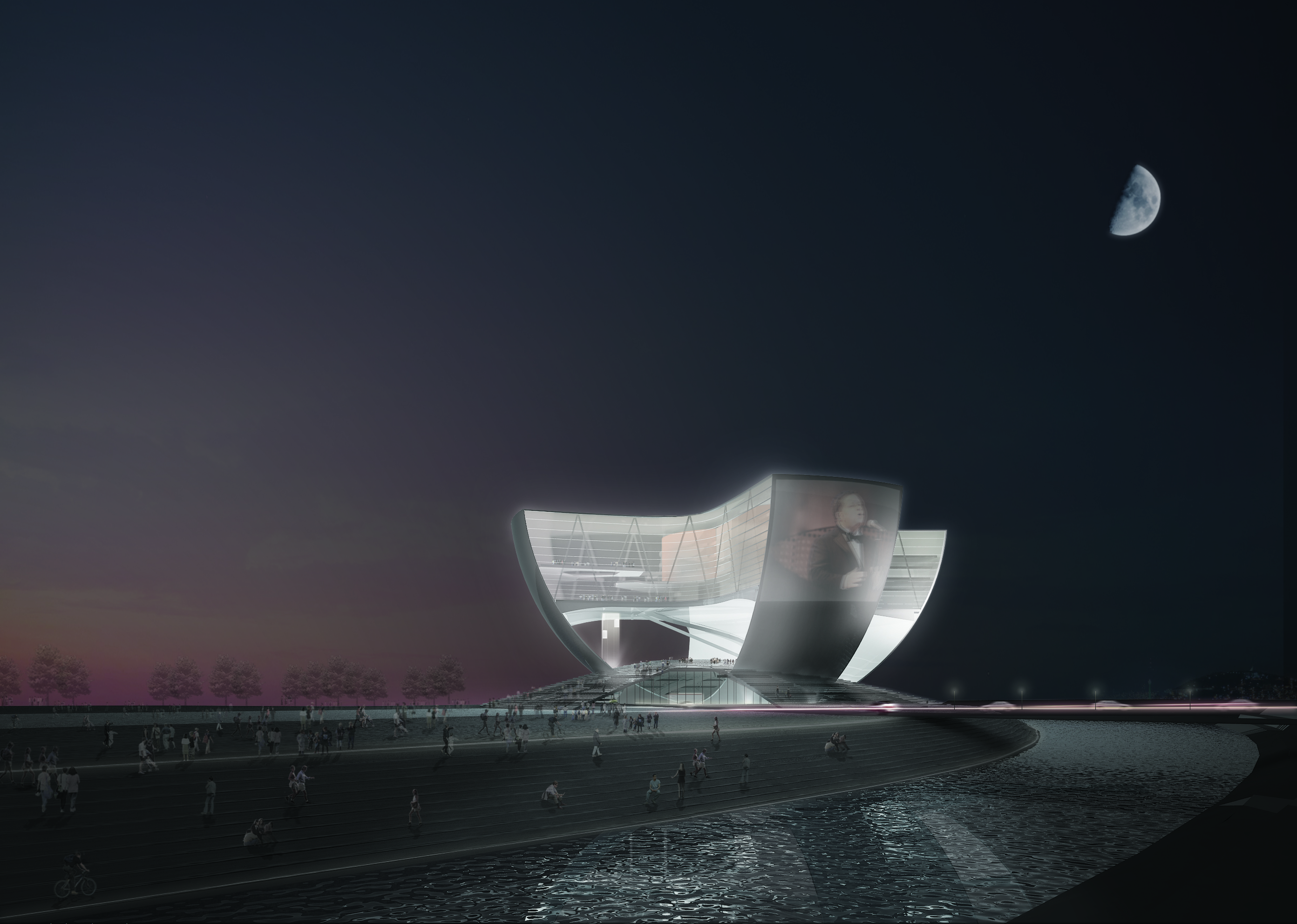
Another idea we came up with is applying the spatial concepts of Korea’s traditional architecture into the opera house. Gyeonghoeru Pavilion(National Treasure No. 224), built on the pond west of Gangnyeongjeon, the king’s living quarters, is one of the most important architectural works in Choson dynasty. When there were the country’s major events, Gyeonghoeru pavilion used to be the place to feast. This Pavilion consists of a simple shape platform over the water. People can enter only through the stairs from the ground to the platform. Arriving there, people can experience panoramic view without obstruction.
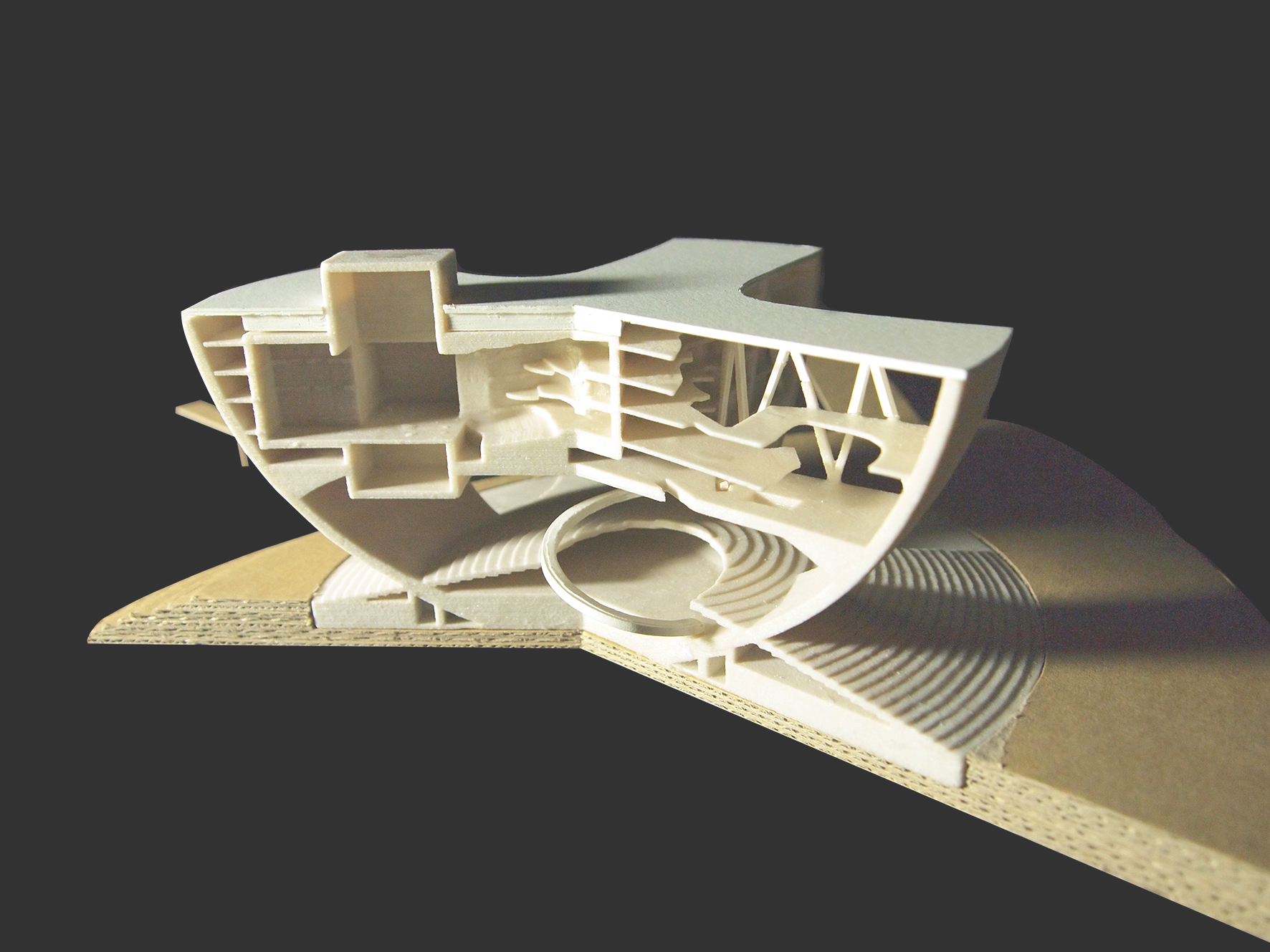
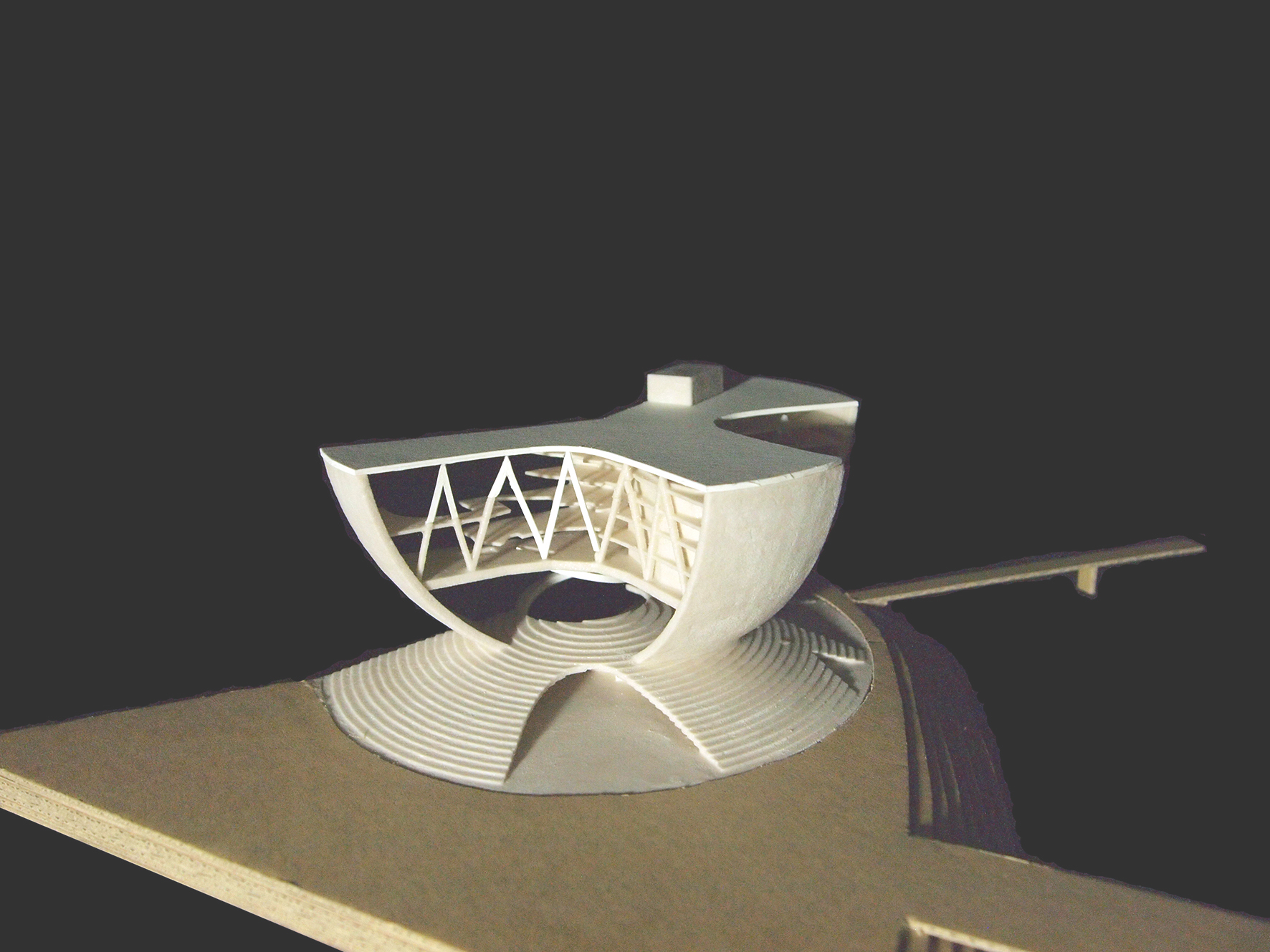
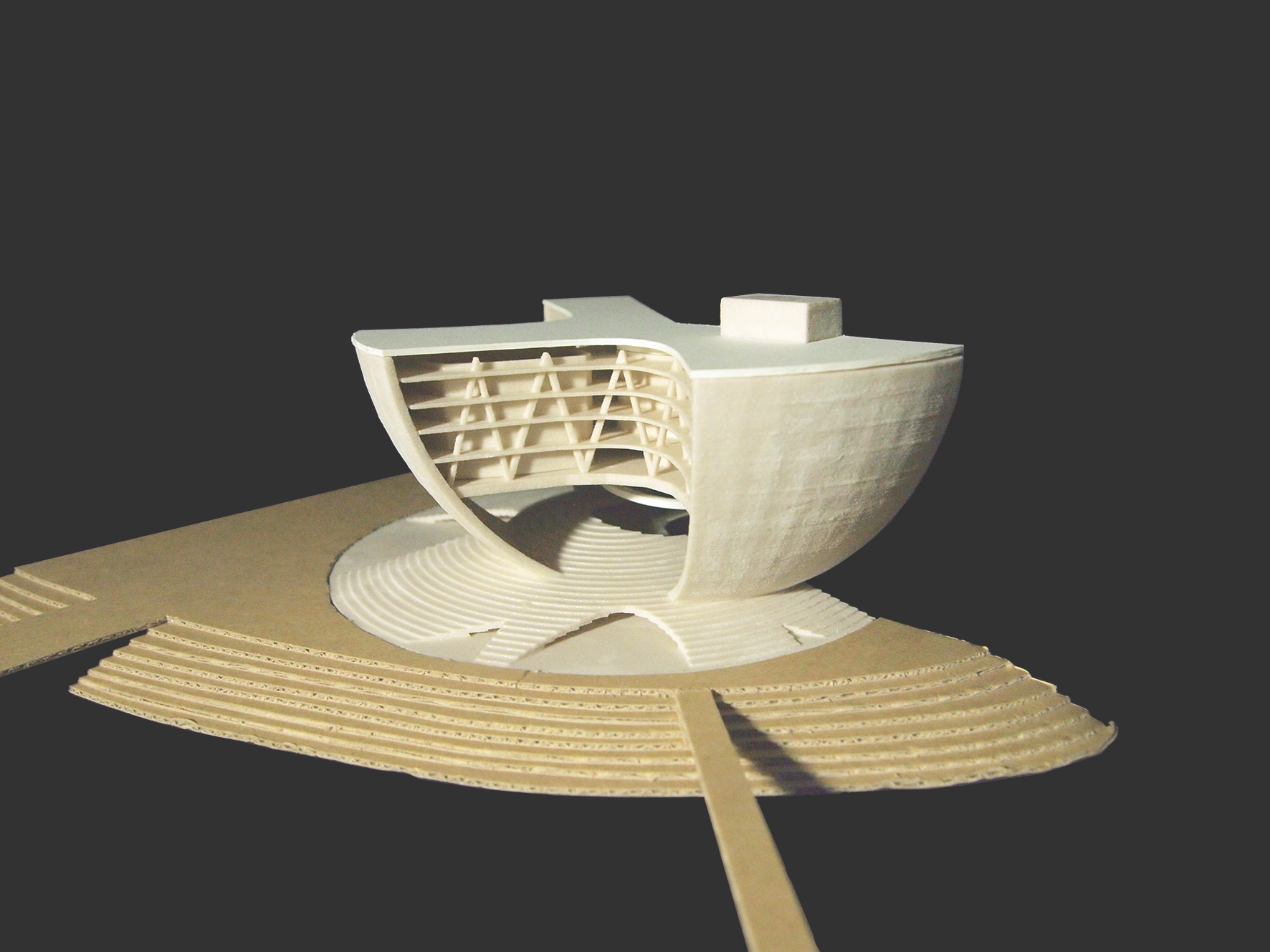
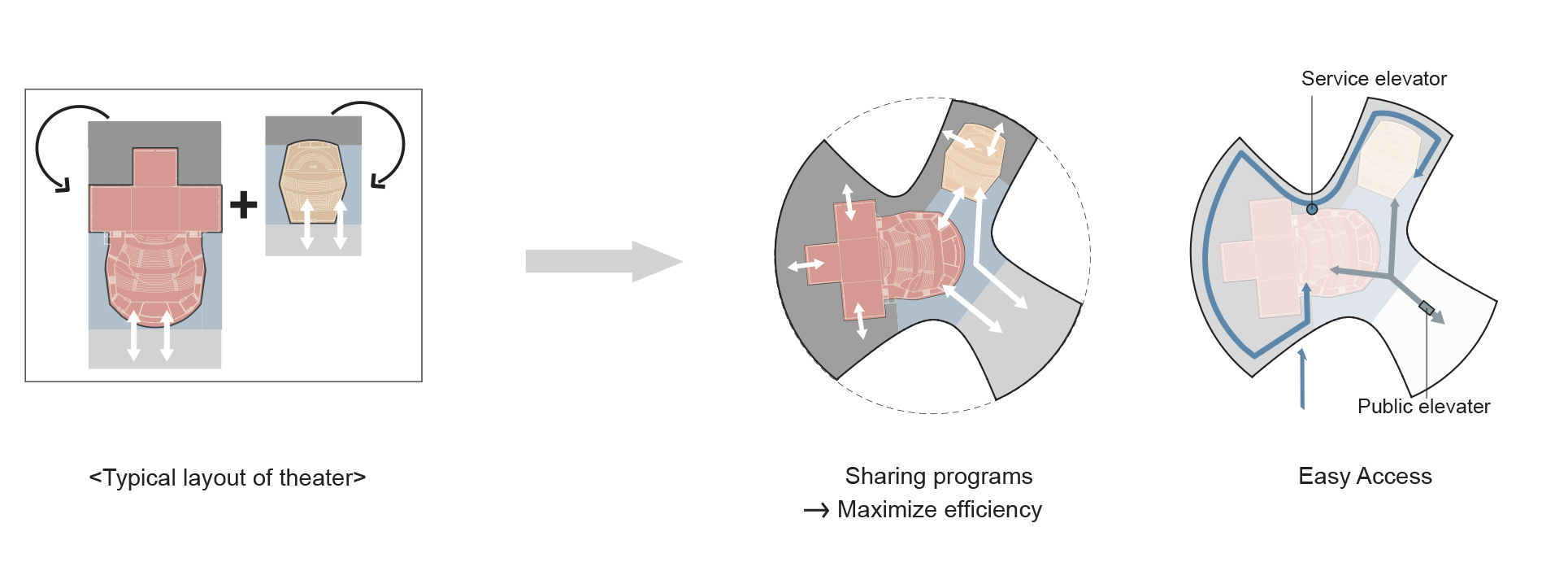
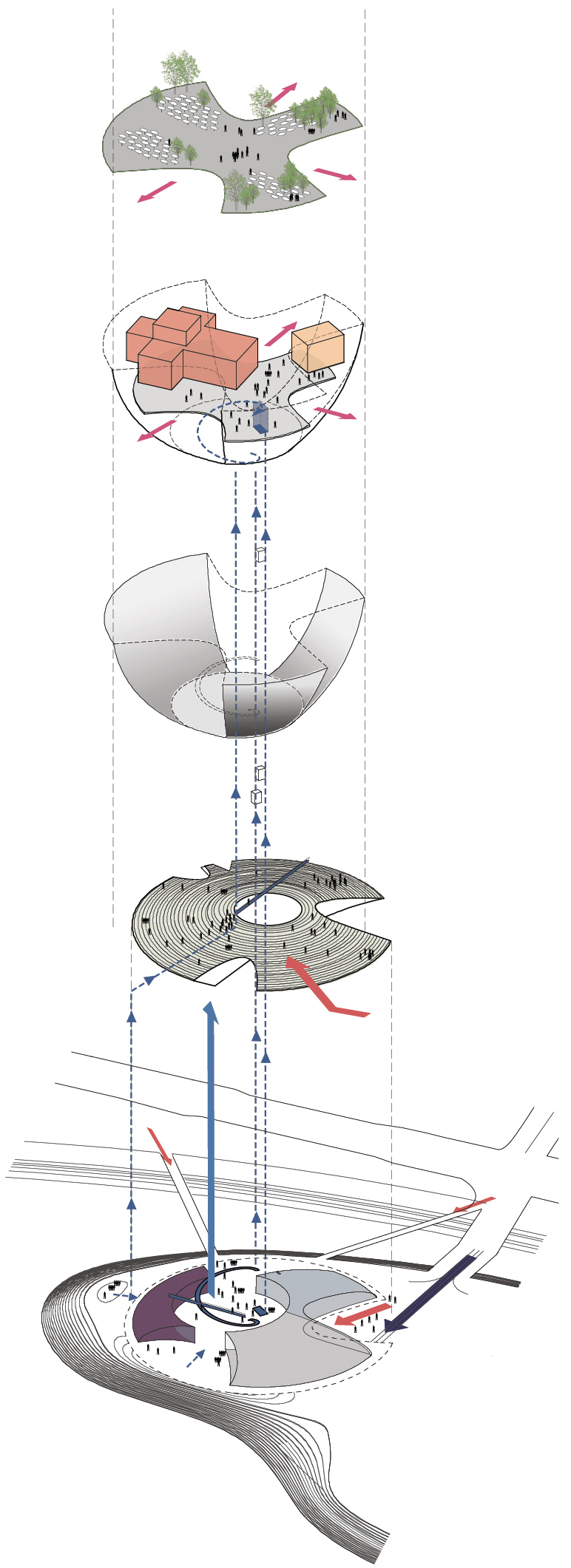
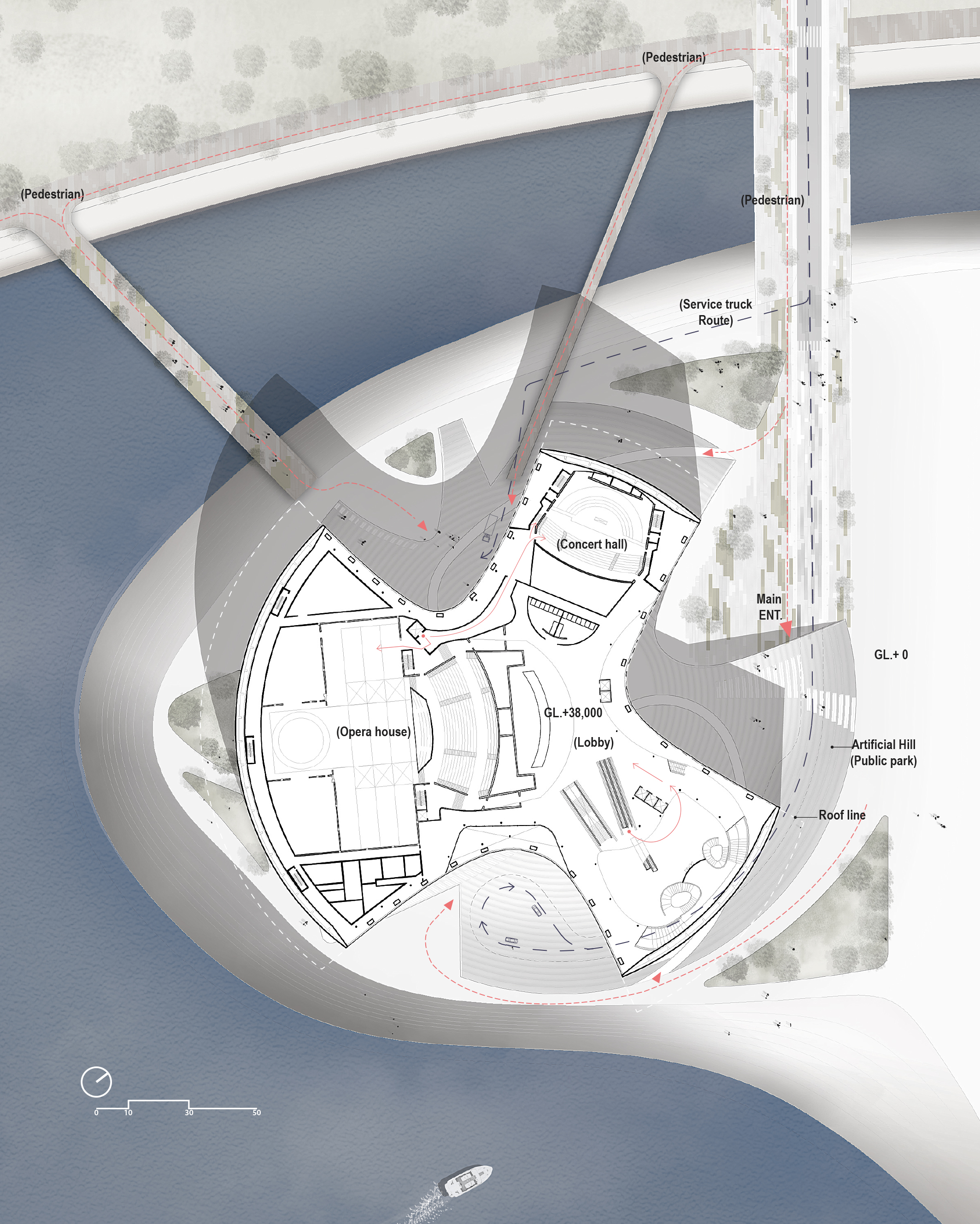
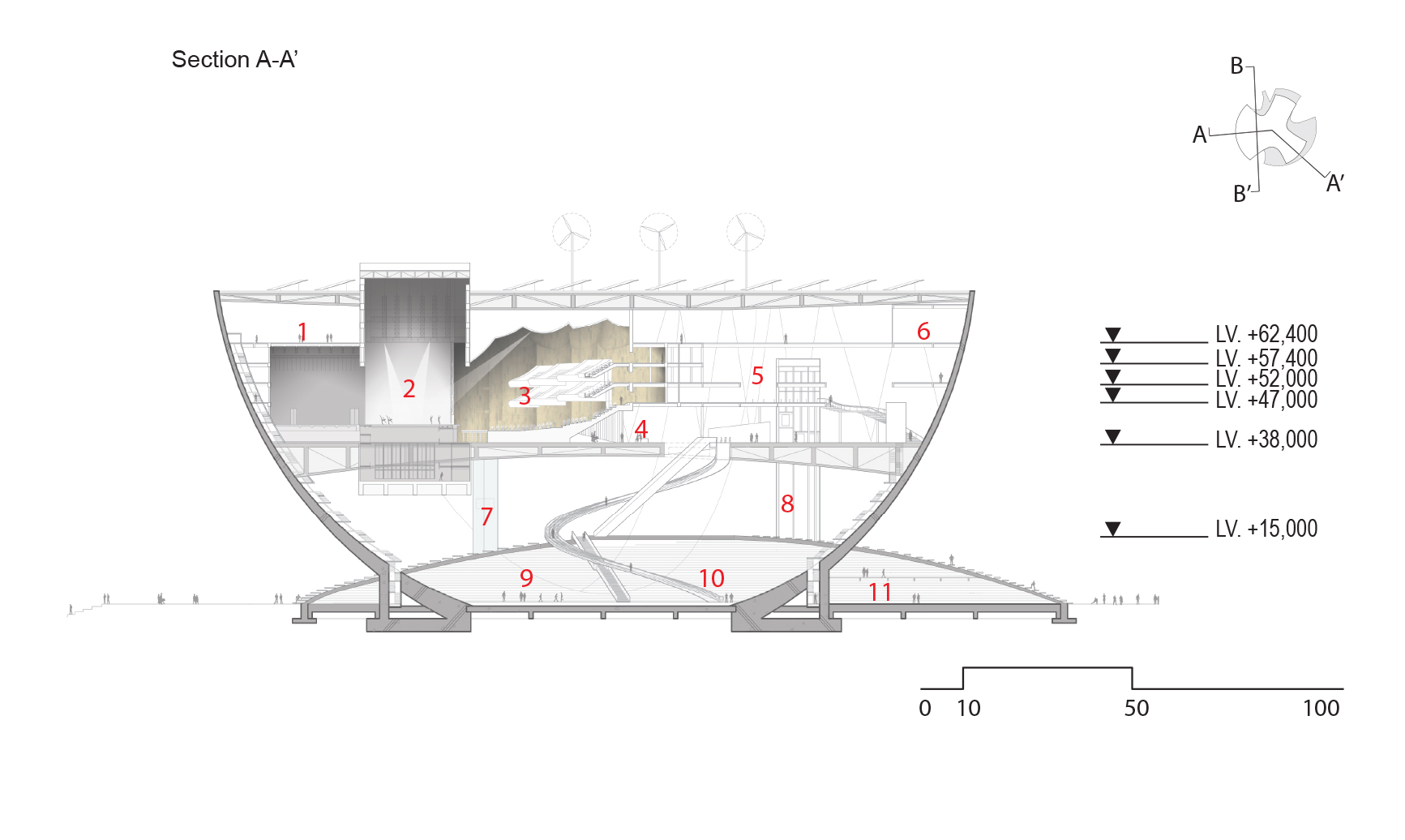
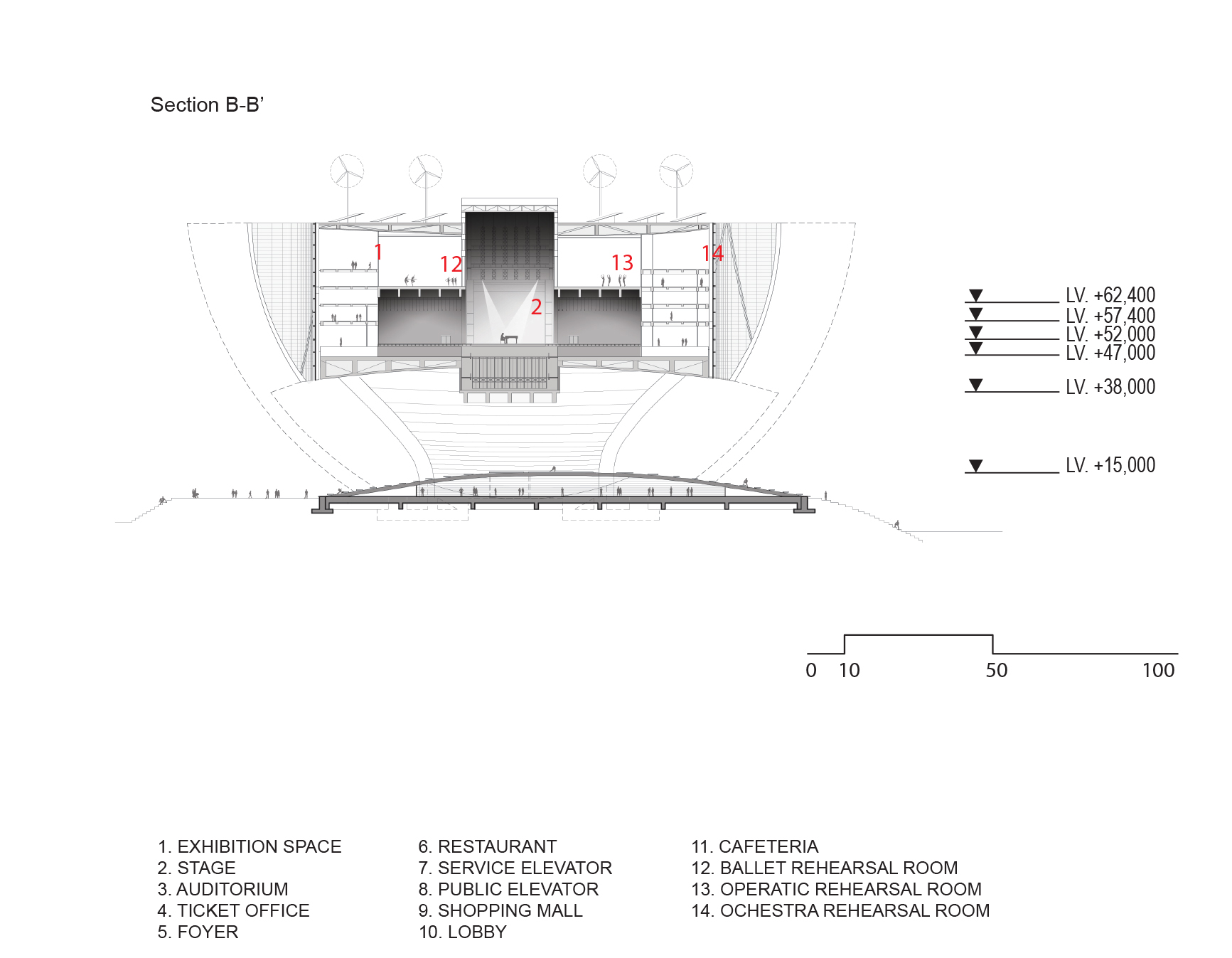
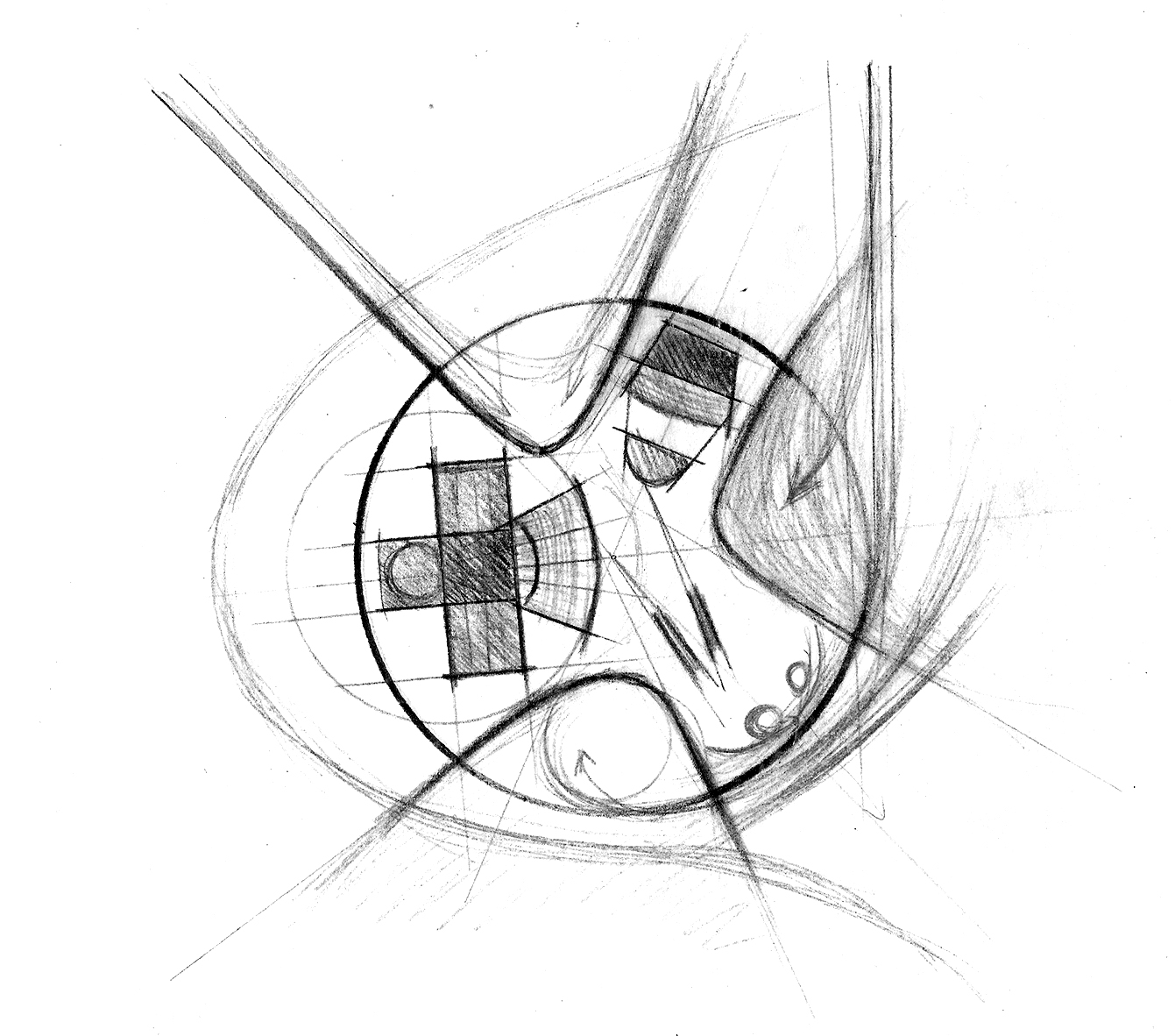
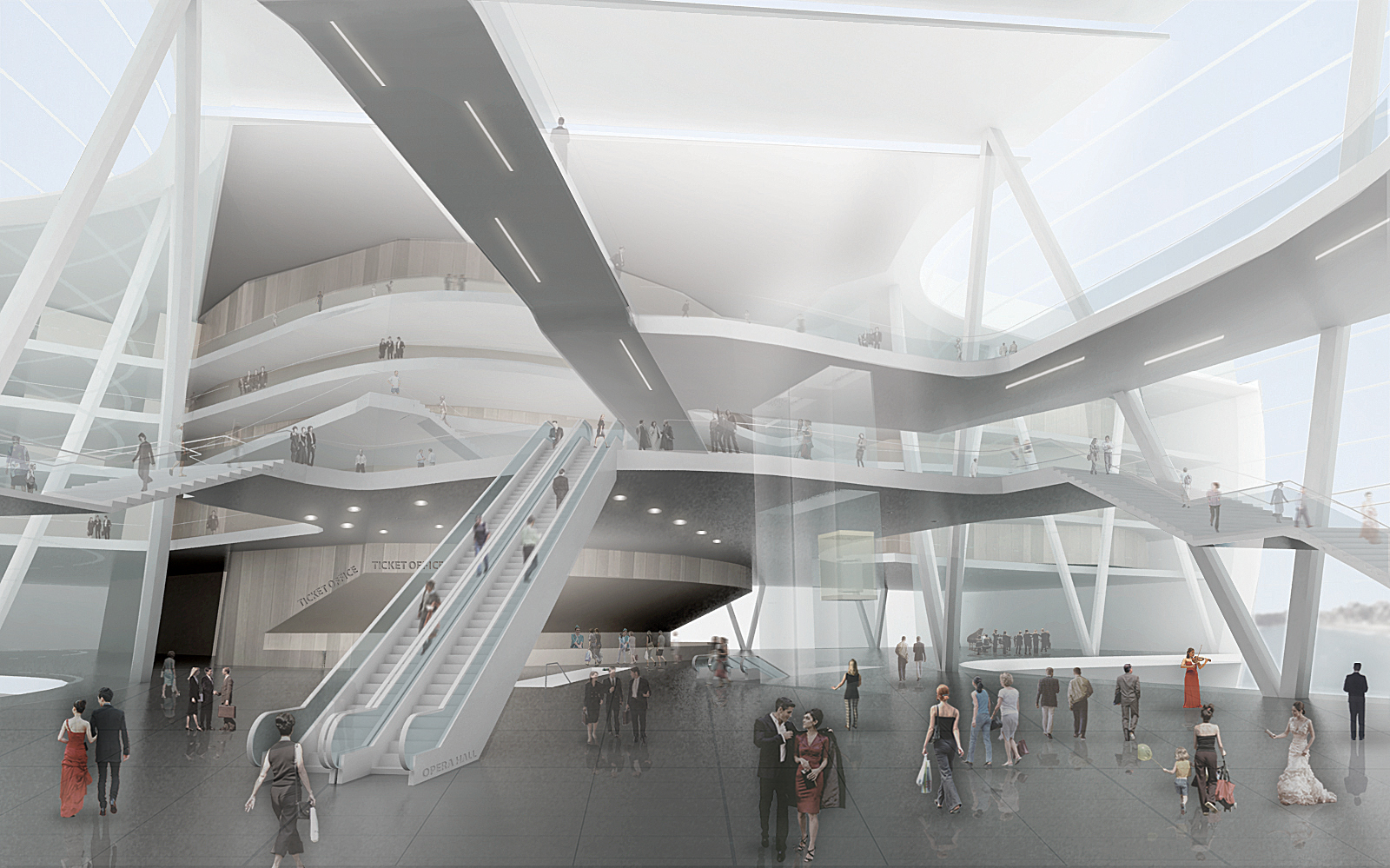
Most important aspect of Busan opera house is how to organize three functions which are Opera Theater, multi-purpose theater, and public lobby. We place these three elements equally on the platform of circle shape so that foyer will be shared by two theaters And then, we cut out the left over space from the circle. As a result, the public of the Busan opera house can always see picturesque views of both ocean and the Busan cityscape and also other wings. Each space is always visually connected.
In order to build this massive structure, we will apply the same civil engineering technology as one used for long span bridge construction. The platform itself consists of a huge truss bridge without any support down below. Truss transfer the entire load from the top to the outer wall of reinforced concrete hemisphere structure. Upside down tripod shape R.C. structure will transfer load from three end points of truss to the ground.